on my birthday I decided to host a Death Café…
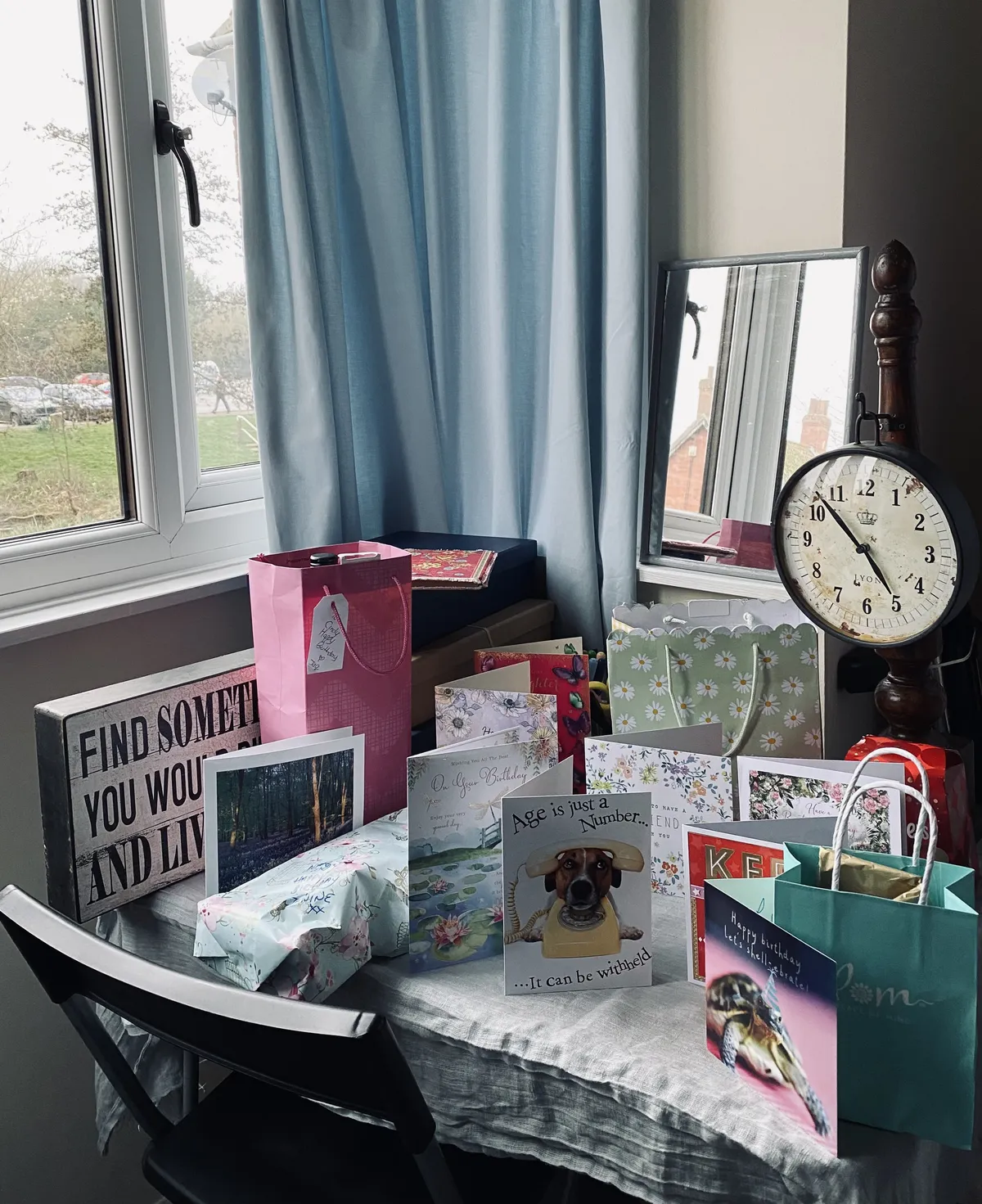
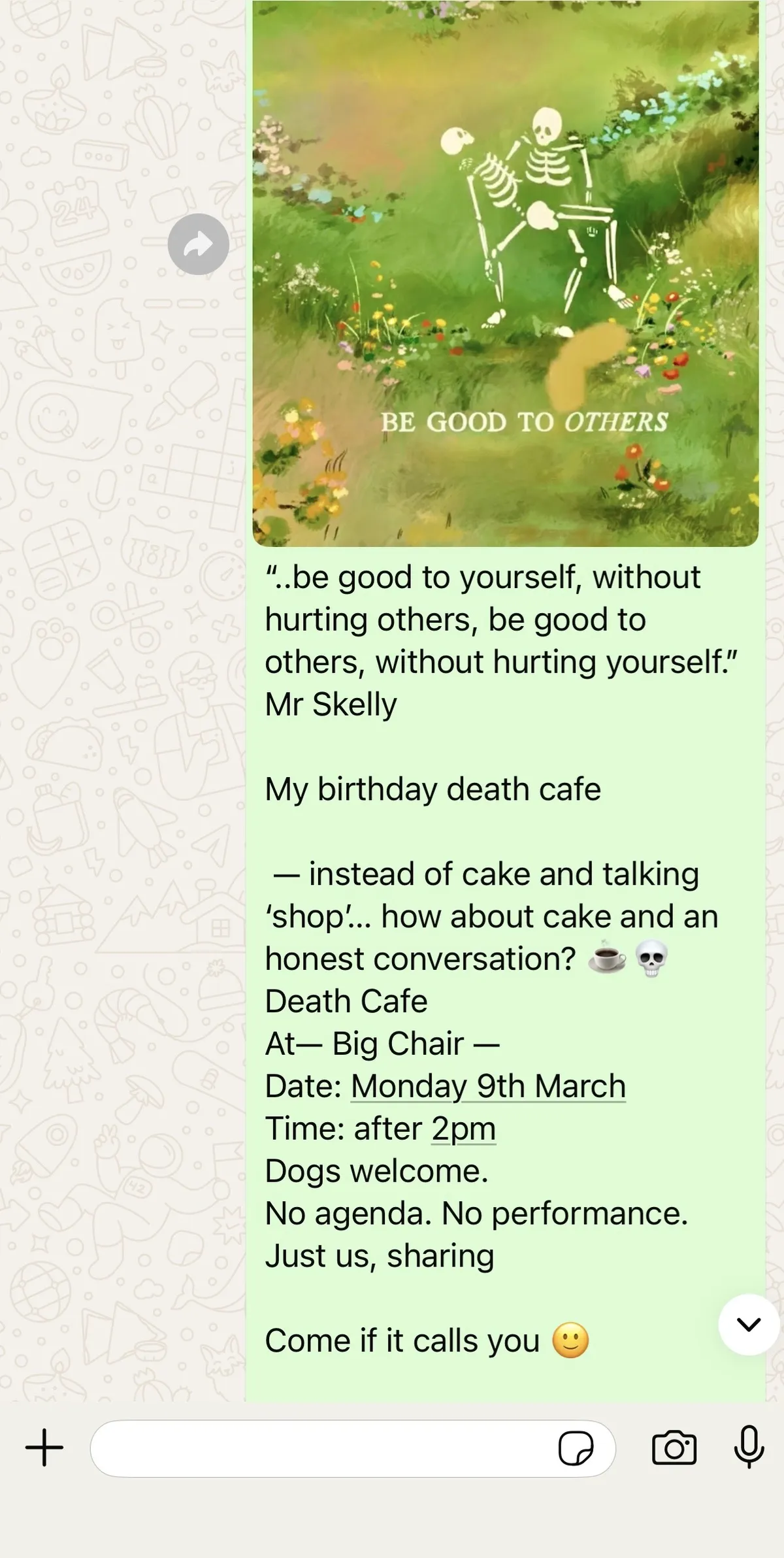
The Big Chair, Horncastle. Monday 9th March, 2026. The furniture shop is an unlikely setting — all reclaimed wood and industrial ironwork, things that have already had one life and are waiting for another. Somewhere near the back, a table has been quietly claimed. On it: an old clock face on a stand, a scrapbook tied with string, a wooden block sign that reads “Find something you would die for and live for it”. And cake. Seven women gather, not all at once. Caroline arrives first, having come straight from a hospital procedure, she was able to make it at the last minute . She settles and watches. Jen arrives late — there'd been a longer call needed at a client's — she will also have to leave before the end. The rest fill the chairs gradually, with the particular easy familiarity of people who have shared difficult shifts and difficult kitchens and difficult families not their own. They are care workers. Death is not unfamiliar to them professionally. Personally is another matter. The opening question lands simply: what's the first word that comes into your head when I say death? Around the table — Gone. Peace. Diet, God. The words sit in the air without needing explanation. (Well perhaps ‘diet’ could do with a bit more!) Jane, clear grey eyes and matter-of-fact, chose “Gone”. As a child she had cried herself to sleep terrified by the sheer finality of it — her father had died four months before she was born, death an absence she had grown up inside rather than witnessed. She'd rather not think about it, she said. And yet she stayed. And by the time burial and cremation came up, she was the one holding court — military pragmatic, unexpectedly funny — explaining what happens to bodies donated to science in rather more forensic detail than anyone had anticipated. Tanks were mentioned. Maggots were mentioned. She delivered both with the calm of someone who has seen things and decided the only response is plain speech. Nancy had come prepared, her question already written on her own piece of paper: Is death endless? It was perhaps too vast for the room at that moment, but it came from somewhere real. She also described a green burial she'd attended — wicker coffin, a quiet field, a celebrant speaking the words of committal as the basket was lowered. At which point a child of about three, standing nearby, piped up with complete certainty: "No, no — he's over there. Standing there." The adults went still. There is no good response to that. There doesn't need to be. Lindy is not, by nature, a person given to the unexplained. Straight-thinking, science-minded, she trusts what can be accounted for. Which is why what she described next carried the particular weight it did. Shortly after her father died, she noticed a ball of light — an orb, moving, present. Her first instinct was practical: someone outside with a torch. She went to investigate. There was no one. The light persisted. Not once, not twice — over three days. She did not arrive at her conclusion quickly, or willingly. But she ran out of other explanations. It was, she came to believe, her father. Not wishful thinking. More like reluctant acceptance of something that simply wouldn't resolve any other way. Alison’s question came from the little written notes: “Is it unusual to feel privileged to be present at someone's death? “ She already knew how that question landed outside this circle — the recoil, the discomfort. Here it landed differently. Not everyone could say so directly, but the “yes” was in the room. Kate knew exactly who she wanted to meet in the afterlife. All her dogs. No hesitation. Caroline observed. The clock was called at three. Coffee had gone cold. Cake remained. The women gathered their coats with the slightly dazed quality of people who have said something true and are now stepping back out into ordinary Monday afternoon. Whether they'll call it worthwhile depends on what they do with it. But Jane went home having said out loud, possibly for the first time, that she had spent her childhood terrified of a word she now uses professionally almost without flinching. Nancy had told a table full of people about her father's light, and people had nodded quietly. A three year old's voice hung in the air above a wicker coffin, pointing at something nobody else could see. The scrapbook sits waiting, mostly empty. There's time.
23011 days so far.